All posts by swanstuff

Writer, small business wannabe, pundit, philosopher, often hopelessly confused, and blessed by a gracious God beyond all imagining (the views expressed by this blogger do not necessarily reflect the Supreme Being, but this blogger hopes he doesn't embarrass the Big Guy too much).

Discourage Discouragement

Speaking to a friend who embodies confidence, it took me by surprise when he expressed discouragement. “I don’t think anyone’s interested in what I put out there.”

My inner critic is bold all the time. Pssst, the lion is the critic, the lion is you. Live like it!

I went through a fit of discouragement recently. At work, something I built from nothing was taken over by others. Hard not to take that personally. The same day, I looked at my book sales and found them… tepid. Discouragement took my breath away. It was short lived. I told myself it’s a marathon, not a sprint, and refused to accept the emotion (you can do that, you know).

A few days later, a friend gave me an encouraging word. “Aren’t you excited about what you’ve done for others?” She didn’t know of my bleak moment, but I think she guessed it when I blinked at her comment and stammered a response. You can refuse to accept emotion but it can still linger in the green room of your thoughts.

In Aron Osborne’s book, So Many Mountains, Which Ones to Climb?, he has an entire chapter devoted to Encouragement, that is, “to give someone courage.” He has many wise words in that book, take a look.

You wouldn’t be human if you didn’t face discouragement, often during the writing of the book, certainly after, and again when it’s for sale. Funny isn’t it? You can have 20 great reviews, but it’s the 1 negative that gets you down, isn’t it?

One of the reasons I started Prevail Press is to encourage people. I’ve found that when you’re discouraged, you can overcome it by sincerely encouraging others.

Another method is to understand the truth of what we do is a long-haul proposition, there are no shortcuts. A snapshot of a lifetime is no insight to that life. “Count your blessings” can be trite, but it is also true. Everyone has them, even if it’s just drawing a ragged breath each morning.

What you have to say is important. Learning any craft is an emotional roller coaster. My latest book, Creativity Wears Boots, describes the creative process. Knowing where you are in your pursuit can help dispel the monsters.

Building a Murder… uh… Story Board

You’ve seen them in TV shows, typically crime procedurals. The detective slowly builds their understanding of the crime on a cork board with photos, strings connecting them, events described or pictured, and eventually, as things link up and holes filled in, the crime is solved.

See the source image
This is from LIFE, a well-written show with an outline for a half-dozen seasons that ended in just a couple, so they wrapped up everything way too fast. Loved that show.

Authors can do the same with a story board to help visualize your ideas. It’s a great way to figure out who’s missing and who isn’t needed.

Whether it starts at the bottom of the top is up to you. Either way, start with your ending. Who (the bad guy) gets burned? Who burns him? How?

Next, figure out who was involved. Your main character probably doesn’t have the tools to win from the beginning (that’s why it’s good to have flawed characters). What events does she go through to learn and grow? Are they events of design or accident? Who are the players? Put them on the board.

Here you begin to discover holes. If your middle is threadbare, you may be missing characters or character traits. Your hero, sidekicks, villains, and thugs should be crashing around in organized mayhem. (Note: This is true of any story, not just crime, adventure, or sci-fi; househusbands can be heroes).

Is your middle too involved? Can characters or events be combined or cut entirely? Can some characters drop out or be lost?

In your beginning, with insights from the board, you can now figure out how to start your story.

Scapple is an inexpensive program that makes building a board easy. https://www.literatureandlatte.com/scapple/overview

In the next few posts, we’ll be looking at beginning, middle, and end. Check back each Wednesday, or better yet, subscribe!

Where Have All the Readers Gone?

I grew up in a family of readers. While occasionally there would be a non-fiction book, we were all mostly novel readers. Dad even got in trouble because he took 12 books with him on their honeymoon (yeah, Dad, what were you thinking? I only took 6 novels).

As a child, I read several books a day, even won an award for most

See the source image
Please encourage your kids and adults to read!

books checked out at the library. As an adult, I scaled back to a couple hundred a year. My sisters always have a book they’re involved with, and grocery bags full of novels ferry between their houses. My wife was a non-reader at first but discovered books in self-defense. She gets into deep, historical books, the kind that scare me, but she’s fearless. My kids are readers. This makes me biased, I’m sure. In my world, everyone is a reader.

Then I got into my 50s, and I went from 100-200 books a year to… 50 or 60 a year (gasp!). I’m a writer and publisher but I don’t read anywhere near as much as I used to. I’m guessing part of it was that when the kids were actual children our TV choices were limited to kid-friendly shows, so I read rather than watched. Not so much these days.

90% of my closest friends are readers. Some prefer non-fiction, but I like them anyway (hey, I finally wrote a non-fiction book and it sells better than my novels). Yet statistics say that only 20% of Americans are readers (Amazon does a big business in books, but how many are actually read?).

As a book-seller, I am amazed at how few readers there are. I’m naïve, but I expected most of my friends and acquaintances to buy my books (they’re priced to sell). Not so much.

This isn’t a poor-poor-pitiful-me post. I’d love it to be a discussion in the comments below. Do you read? Why or why not? Do you read as much as you used to? Why has it slowed down?

Voice – The Topic that Terrifies Writers

We aren’t talking about the reality singing show when we say The Voice, we’re talking about that thing that seems so hard to describe that is a vital element of a successful story.

We can look to a singing icon, though, to better understand Voice. Reba McEntire gave an interview about her early days learning to sing. She learned by doing covers of other people’s songs and sounded just like them. Her comment was insightful, “I had to learn to sing like everybody else so I could eventually sing like myself.”

See the source image
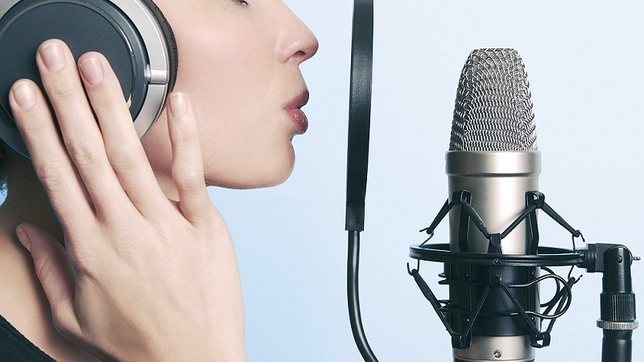
Just part your lips and speak… (is that how that goes?)

That’s an excellent description of narrative voice. Voice isn’t something you put on, it’s something you discover. It consists of your cadence, your word choice, your sentence structure, your way of describing, YOU.

When we talk to a friend, we hopefully are relaxed and natural. It’s when we try to pretend to be someone beyond, above, below, or what we think people want to hear that we get tripped up.

Think about an actor’s version of voice. I’ve been enjoying Chris Evans’ filmography, from the independent movies, Fantastic Four movies (he was the only good part), Captain America movies, and other studio movies. Evans has a range of expressions and movements. His body language changes from role to role, but he pulls from a stock of movements that are uniquely Chris Evans.

Impersonators cherry-pick such movements and mannerisms to convey the celebrity of choice. Then they grab their cadence and word choice, their manner of speaking, and away they go.

Once you’ve mastered writing so that it’s effortless, your voice will ring out. Sure, you can put on a persona when you write, but your best stories are the ones you are true to with your own voice. In other words, don’t worry about it. When you’re ready, when you’ve written like other people, you will eventually sound like yourself. That’s Voice.

Put the “u” in Author

I love to laugh (Ha-Ha-Ha!) when I read a story. I’m fairly certain I am incapable of writing a story without humor. Even if I were to write a serious genre, some of my characters would be witty, or employ dark humor.

But that’s just me.

And that’s the crux of it, right? You are the author of your story and you should not have to include something that’s not “of you” if you don’t want to. You may not want to write a comedy, though, if you’re humorless… just sayin’.

Which Story is Yours?

There is a school of thought that suggests authors and especially new authors should chase trends. If vampires are in, write vampire stories. That’s a bad idea. If you write a trendy story that isn’t “you” it will almost always be shoddy, not to mention trends are fleeting and by the time you write your trendy story, it probably won’t be trendy still. Never write someone else’s story (unless you’re a ghostwriter), always write your story.

This requires a degree of self-awareness.

Think of a story as your friend; write the ones you want to spend time with, because you’re going to spend a lot of time with it!

Back in the day, my stories trended toward dark tales. As I changed, so did my stories. I have no interest in writing horror, though I know how, and I’m playing with a story that has a serial killer, which I would normally shy away from, but I’ve got an idea that takes the character to a different level, so I may get away with it.

While every writer is special and unique, there are hundreds of thousands of people who would eat your kind of special with a spoon.

In a sense, we’re talking about Voice, but not exactly (that’s next week). Rather, we’re talking about writing stories where your voice would be authentic. Know your genres. Don’t be concerned if the genre isn’t the hot ticket right now. There are books I’ve only be able to get through a couple of paragraphs… that doesn’t mean the book is bad, it’s just not my kind of story. That’s OK. It’s also why publishers have several readers who weigh in on taking a story. What is awful to me may make someone else’s day.

Having said all that, don’t be afraid to stretch yourself. Know your genre’s, but know the neighboring, stretch genres, too.