Building Trust with your Readers

One of my favorite authors died a couple years ago, but his characters live on under different writers. Some have been OK, some have been Not OK, a couple, IMO, have been bad.

Get tight with your reader

When I saw my favorite character’s first other-written novel, I quickly picked it up off the library shelf, looking forward to reading about my female PI friend.

Let me say that I usually read a book through to the end. Of late, if I don’t like a book, I’ll set it down after a few chapters.

This was the first time I dropped a book at the first sentence.

What should have been an easy opening was so badly written I lost complete trust in the author. I don’t know how that line got by editors, but WOW it stank. I showed it to a friend and he blinked, snapped the book shut and said, “That stupid sentence is going to haunt me for days.”

I’m dead serious. It was that bad.

More than anything else, the first sentence, paragraph and chapter is all about building trust with your reader. That is done with:

  • A strong opening that is…
  • Well written with…
  • Proper grammar in the narrative that includes…
  • A hook that grabs me and has…
  • No typos that…
  • Gives me a solid glimpse of a character I can care about with empathy, curiosity, anger, disgust, or any other strong feeling. What we have to avoid is, “who care?” or apathy toward the characters.

This is how you build trust, because a book is all about trust. The reader is trusting the author that reading this won’t be a waste of time, that you the writer knows what you’re doing, that the reader will be satisfied by the story.

In The Amazing Voyage II, Isaac Asimov’s lead character came off like an idiot. He wasn’t asking any of the questions that a normal human being would ask, or catch any obvious issues presented by the character. Then at the end, we suddenly find out that the main guy DID catch everything. Through the whole book I’m calling that guy an idiot, then the flip came, and I felt cheated. I want to read the Foundation series, but I don’t trust the writer. I read that book 30 years ago and still don’t trust Asimov. Without trust, you aren’t going to invest hours in the book.

Asimov’s mistake was in making the errors so obvious that I caught them all. Had he been more subtle and the main character had to uncover the errors for me, I would have been fine, but we expect our main characters to be at least as smart as we are. Typically with mysteries, the detective solves the clues as we go along. In the first place, Asimov’s character had to use copious exposition at the end (where it never belongs). By doing so, he told us we had never known the character, which is a requirement of a story. Even the unreliable narrator makes everything fall into place at the end. It works because we never distrusted the UN or thought the UN was an idiot). He wasn’t an unreliable narrator, Asimov was an unreliable storyteller.

Trust is vital. Earn it.
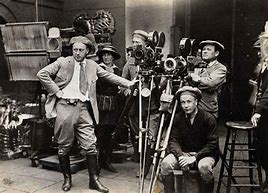
Cinematic Writing: Keeping Your Story Reel

Storytelling is a visual medium

Who doesn’t want their novel turned into a movie?

While I wouldn’t say you should write your book with the goal of someone buying it to make a movie, I think it’s valuable to borrow techniques from screenwriters to improve your story.

A movie script is the most structured form of writing you’ll encounter. The three-act structure is tightly adhered to, and as Blake Snyder reveals in his book Save the Cat, certain things happen on certain pages and only on those pages.

The storytelling medium is supremely limited because the writer has 90 to 110 pages, or 90 to 120 minutes to tell the story. In contrast, your book will likely take hours to read. Because of this time compression, screenwriters have certain techniques that we as novelists and non-fiction writers can borrow for our books.

Yes, I said non-fiction writers. Moneyball was written from a book about statistics. Yes, it was baseball, too, but if the author hadn’t done such a cinematic job on his book, it might not have happened. Further, screenwriters can take the principles of a non-fiction book and be inspired to write a script that incorporates them.

First and foremost, for a script, every scene must be essential to the story. A screenplay’s chief structure is the spine of the story, or the dramatic question. Anything that doesn’t hang from the spine has to go.

But that isn’t enough for the screenwriter. Every scene has to do double and triple duty, packing as much into a scene as possible, including plot, character development, foreshadowing, and more. As book writers, we can borrow that double duty for our scenes. We also have more leeway to interpret what hangs from the spine and what doesn’t. I’m not saying you should compress your story, this is a book, not a movie. Borrow the techniques, not the rigidity.

Movies are visually striking. Your scenes should be, as well. That doesn’t mean ever scene must be set somewhere exotic, but you need to paint your scene with just enough unique detail for us to visualize it. The reader will fill in a lot from just a few cues.

Every scene is active, layered with conflict, visual metaphors, and energy. Talking head, just two people chatting, is rare. Consider the scene in Avengers, Age of Ultron, when Steve and Tony are having a tense conversation. They aren’t sitting drinking tea, they are chopping wood with more and more intensity until an angry Captain America rips a big log apart. You can turn off the audio and see what the scene is about. Then Tony has a conversation with Fury as he works on a truck engine. Characters should do something metaphoric as they speak.

Dialog is almost always short and snappy, to the point. Few characters are long-winded. Your dialog should have no small talk, nothing unrelated to the spine.

Strong, clear character arcs are important. Unlike the comic book Tony Stark who never changes, the movie Tony Stark has a vast character arc that includes being selfish, heroic, traumatized, broken, and sacrificially heroic, the complete opposite of where he began. Comic books need to maintain the status quo, movies don’t. Books don’t, even if they are series, the characters should change. If you have a strong character arc, you can include a lost novelist technique of foreshadowing. Again, the Marvel movies are outstanding at this. Every argument Cap and Iron Man have is a foreshadowing of the character’s eventual change.

Finally, the ending is clear, wraps up all major plot points, and leaves us energetically satisfied.

Studying screenwriting will improve your book writing; there are a lot of tricks I haven’t touched on here. You have more freedom, but using the concentrated techniques of a screenwriter can help guide you through your story.

Isolation: A Vital Element of Story

Your main character, the hero of the story no matter the genre, must be isolated to make a logical, powerful story.

I don’t mean stranded on a desert island isolated, but cut-of-from-help isolated.

It’s amazing how many pictures of “alone” and “isolated” are negative. Am I the only one who likes to be alone?

Consider, your hero encounters a problem in the first act of the story. We learn who the hero is, what their normal is, and then something happens… this is the inciting incident. What happens next is the isolation of your hero. It isn’t enough for the problem to be solvable, it must only be solvable by the hero.

Such isolation takes on many forms. It could be they (the hero and the merry band of support characters, or the ensemble) are literally cut off. Their plane crashes in the dinosaur-infested jungle and there are no other humans for miles.

Or it could be a matter of skill set. The president is dying on Air Force One and the hero is the only doctor. It all on the hero.

It could be relational. The hero estranged from his dying father is the only one who can fulfill his last request. Or a terrorist will only deal with the hero, no one else.

This is vitally important because, hey, if there is someone better suited to save the day, why is your character the hero?

This is particularly difficult in today’s society where everyone has a cellphone. You either need to get rid of the phone, out of range, broken, or dead battery, or isolate through time; there are others more suited, but they don’t have time to get there, or are unmotivated, or in league with the villain.

How is your character isolated? Make sure it’s clear and strong or your story will be unbelievable.

How Supple A Spine

Along the lines of last week’s post, we’re going to look at the flexibility strong writing gives us. There are two schools of thought, literally.

Look at writing programs around the country and you’ll find that most concentrate in one area, such as Technical Writing, Communications (Marketing), Instructional Design, Creative Writing… the only problem with that is that most of those disciplines don’t take a strong writer that long to learn.

See the source image
Be Twisty with Skill!

The other school of thought is to focus on strong writing the first year, then hit each area of writing for a semester. Pensacola Christian College’s writing program (my daughter is now rolling her eyes because I talk about this program a lot), is just that and it’s the best program I’ve seen.

As someone who hires Instructional Designers, you’d be amazed at how many can’t write.

I’m not saying you have to go to school to learn how to write. I am saying that if you are a very strong writer, you can learn another writing discipline quickly. The reason I like PCC’s approach is because it was mine across 30 years. I began with writing essays and short stories, then in college, papers, and in my major plays where I learned structure and that every kind of writing has its own unique structure. Plays and screenplays have rigid structures, stories and novels, less so, but still structure. It gave me the ability to look for structure, and once you have that, the rest fills itself in.

I continued to learn writing though trial and error after school, a bad novel (with potential), more plays, a couple screen and teleplays. Then working at Boeing, I took a class in Technical Writing and found it easy.  Years later, I learned instructional design in an afternoon. Still later got a certification in copywriting. In all of these, I was at the top of the class. Not just because I’m handsome, but because I had the foundational tools to begin with. Then I worked for a company writing resumes and got the best editing I’d ever received, that served all my other writing.

For a few years, I was a ghostwriter. My theatrical background helped me easily capture someone’s voice. I wrote a dozen books, learning from each of them.

PCC shoved that all into 4 or 5 years. Of course I’m a fan.

I have other friends who wrote newsletters, skits, blogs, and produced a wonderful novel with more to follow (read about her in my forth-coming book around the end of the month (you’ll see an announcement here)).

I’ve spent the last 20+ years making a living with different forms of writing. Typically for a company because I suck at self-promotion. It began with strong writing skills.

If you’re a strong writer, you have amazing flexibility. Having a dream is important, but paying the bills is pretty good, too. I’ve heard someone say if you want to finance a writing career, dig ditches because if you write for your day job you won’t have anything to give your dream. There’s some truth to that. But not always. It might slow you down or it might fire you up, because, hey, I write every day. And I have three books of my own and three strong screenplays. It works out.

Refine your skills and enjoy the suppleness it gives your creative spine!

The Writing Dream

Much like the American Dream, the Writing Dream can be a bit tricky.

It begins somewhere before, during, or just after the first story, be it a short story, a blog, or a book. You realize it isn’t so hard after all (that first one seems like a mountain, the future like hills. It’s a misperception because they are all mountains but go with it for now). And you begin to dream.

A long time ago, I would have guessed that dream is to have J.K. Rowling’s sales, yet after talking with hundreds of writers, the dream goes all over the place. Some want to use writing to travel, others to burn their high school English teacher (figuratively, not literally).

Dream Big – Be Ready if it Changes Capes.

However, like the American Dream, what you think is the goal may just be a weigh station, or even a lodestone that gets you moving so you can get to where you’re supposed to go.

After a while, once you perfect the craft of writing, things will pop up. Opportunity or distraction? Hard to know. William Goldman was happy being a novelist. He wrote half a doze books and then one got turned into a movie. Marathon Man, starring Dustin Hoffman and Sir Laurence Olivier, became his fork in the road. He just wanted to write novels, but the studios wanted him to write screenplays. So he did, and became one of the best at it. In fact, he worked on most Hollywood movies in the last 40 years doing rewriting, polishing, or mentoring of screenwriters before his death.

He said he wrote screenplays for money and novels to keep his sanity. Yet he wrote no more novels (too bad, because I love his novels). Was this a slap to his personal Writer’s Dream?

Not at all.

The better you get at writing, the more opportunities arise. Sometimes you have to say the second hardest word, “no.”  Sometimes the number 1 hardest word, “yes.”

How do you tell the difference between what should be yes and what should be no?

Ask yourself a couple questions:

  • Will this further my goal?
  • Will this give me a new, brighter goal?
  • Will this detract from my goal?
  • Is this a worthy philanthropic task? Because sometimes you need to do right without reward. It’s just a truism of life.

It also helps to be honest about how focused you are on your goal. If you say no to something, like writing Sunday School curriculum, for example, because you need to focus on your book, but instead eat bon-bons and watch TV, it’s time to honest with yourself. If you do, in fact, work on your book, happily say “no.”

Say “yes” when you can see the next step beyond the request. Is it moving you where you want to go? Are you gaining skill or finding a new application for your writing? Sometimes a detour is helpful. And sometimes the other parts of your life need attention. Turning down PTA meetings to write misses how important your kids are.

Ultimately, keep building the skill to be desired. And don’t be surprised if a new path springs up. Determine what’s important to you. For Goldman, it was money. For you it may be something different.

Your Writer’s Dream can be edited, just like a story.

A unique publisher who is Author-Centric and Reader-Sensitive