Put the “u” in Author

I love to laugh (Ha-Ha-Ha!) when I read a story. I’m fairly certain I am incapable of writing a story without humor. Even if I were to write a serious genre, some of my characters would be witty, or employ dark humor.

But that’s just me.

And that’s the crux of it, right? You are the author of your story and you should not have to include something that’s not “of you” if you don’t want to. You may not want to write a comedy, though, if you’re humorless… just sayin’.

Which Story is Yours?

There is a school of thought that suggests authors and especially new authors should chase trends. If vampires are in, write vampire stories. That’s a bad idea. If you write a trendy story that isn’t “you” it will almost always be shoddy, not to mention trends are fleeting and by the time you write your trendy story, it probably won’t be trendy still. Never write someone else’s story (unless you’re a ghostwriter), always write your story.

This requires a degree of self-awareness.

Think of a story as your friend; write the ones you want to spend time with, because you’re going to spend a lot of time with it!

Back in the day, my stories trended toward dark tales. As I changed, so did my stories. I have no interest in writing horror, though I know how, and I’m playing with a story that has a serial killer, which I would normally shy away from, but I’ve got an idea that takes the character to a different level, so I may get away with it.

While every writer is special and unique, there are hundreds of thousands of people who would eat your kind of special with a spoon.

In a sense, we’re talking about Voice, but not exactly (that’s next week). Rather, we’re talking about writing stories where your voice would be authentic. Know your genres. Don’t be concerned if the genre isn’t the hot ticket right now. There are books I’ve only be able to get through a couple of paragraphs… that doesn’t mean the book is bad, it’s just not my kind of story. That’s OK. It’s also why publishers have several readers who weigh in on taking a story. What is awful to me may make someone else’s day.

Having said all that, don’t be afraid to stretch yourself. Know your genre’s, but know the neighboring, stretch genres, too.  

Adult Coloring Books

It’s funny, every time I say or write that, I want to eschew concise language and phrase it “Coloring Books for Adults.”

Recently a man who may be a friend and may not be, who actually likes fig newtons, frosted pop-tarts, and everything else wrong, poked fun at “adult coloring books,” knowing full-well that they aren’t about naked people.

All those fig newtons must have addled his brains, because he was seeing questionable adults with crayons in hand and tongue lodged between their teeth as they scrub the page trying to stay within the lines.

I have no such misapprehensions.

While I prefer the term “All-Ages Coloring Books” because, you know, the kids can got at it with crayons, but really, the beautiful line art is for complex coloring using colored pencils, paint pens, or watercolor, employing such techniques as shading, hueing, color blocking, and other terms that are beyond me.

That’s why Prevail Press has published Dawn Davidson’s Faces & Fantasy, a collection of 30 amazing drawings begging to brought to living color. But don’t take my word for it, check out Dawn’s example of what Adult Coloring is (and she does it with her clothes on. At least I think so, you only see her hands. Be nice in your imagination).

Not too long ago, I was at the beach, and several people were adult coloring. It’s catching on. Maybe you should give it a try. Faces & Fantasy, available at Amazon.

Exposition Wears Concrete Shoes

We’ve all read the books that are so exposition-heavy that you feel exhausted getting to the end of the chapter… if your read that long.

Yet exposition is necessary. Sometimes you need to know what came before, why a setting is significant, or just explaining how something works or the story doesn’t make sense.

See the source image
Ned would read every word of a Tom Clancy novel.

Exposition differs from description in that it’s required information that is apart from the story, but needs to be understood for the sake of the story.

There are several ways to handle exposition, and a few “rules.”

Rule 1: Give it to the reader when they need it and not before.

Rule 2: Give them only what they need to know (be strategic and be concise).

Rule 3: Make sure it IS needed. If Tesla’s intimate love a pigeon isn’t required knowledge to his invention of cell-phone technology, don’t include it in exposition (it may be included at some point for other reasons).

Rule 4: Do NOT include it in dialog unless it’s necessary. Remember, effective dialog between people includes not saying what the other person knows. “As you know, Kit, Shakespeare was a frustrated actor who had a lisp and a hunched back.” If Kit already knows it, the speaker would not be informing him of it. If Kit doesn’t know it, only include it in dialog only if Kit must know it (see below).

Rule 5: Hide it if you can.

The ways to handle exposition:

  • With a spoonful of sugar. Or saccharine. In this method, you break the exposition up into chunks, adorned with comedy or conflict. For example: You have to explain the process of mixing an explosive. Rather than just tell us in a block, your lab assistant assures you (the main character) that he knows how to do this. Problem is, he doesn’t, much to your horror and anger, you must walk him through the process. This can be funny or serious. The attention is on the characters and the process is explained almost by accident.
  • With concrete shoes. Tom Clancy is the master of this. Want to know how to build an atomic bomb? He sets aside characters and just lays it out. Most of us skip over it, engineers eat it with a spoon.
  • With a spoonful of concrete. This is a mixture of the first two. Your main character remembers/reviews/discovers the exposition. Kirk recalled the first time he’d been to this planet and suppressed a roguish grin. Risa was a pleasure planet, and they knew their business. Rita, the famed astrophysicist was a guest… I mistook her for a working girl. Rita had discovered the transwarp signature of the Curator’s race, the ancient beings who had….
    You get the idea.

You need to decide how to handle it by analyzing the pace of your story. Can it handle a block of exposition without grinding the pace to a halt? Can it be embedded and parsed slowly?

How do you handle exposition?

Kindle Price Gouging

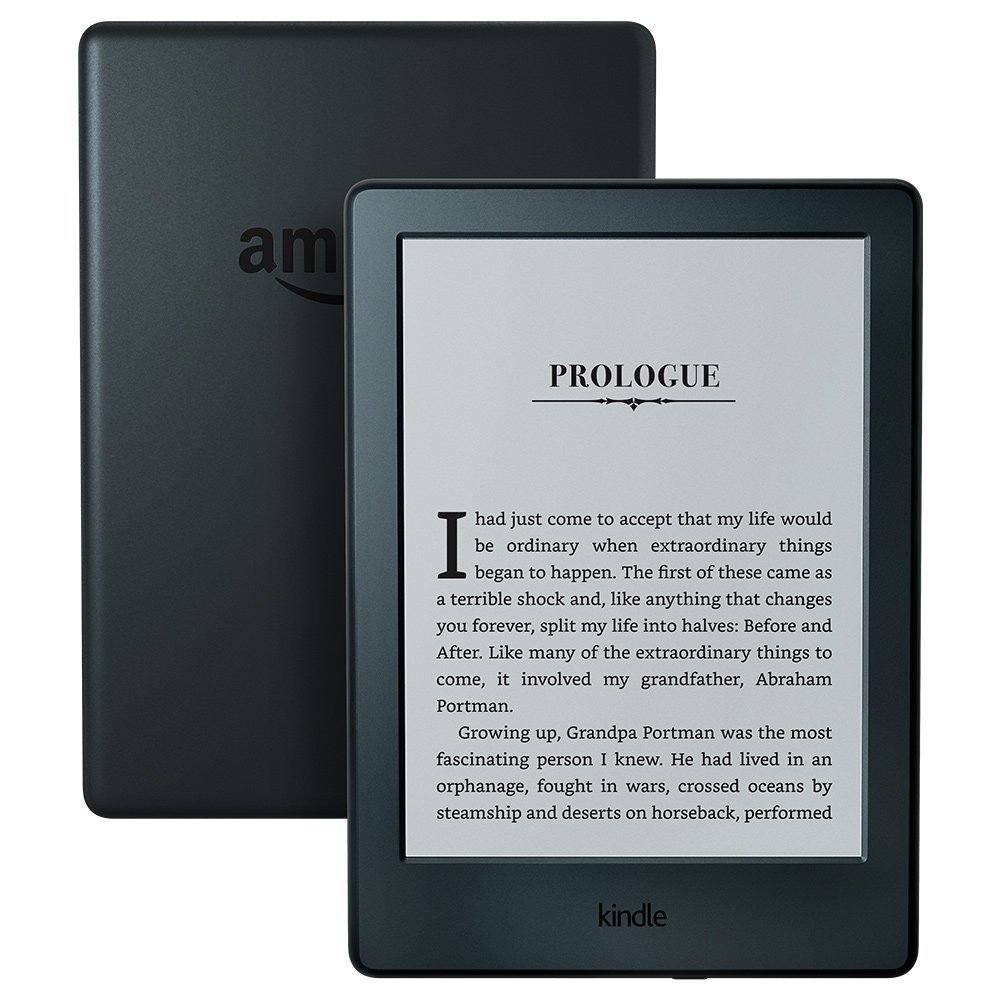
I refuse to buy a book, paper or Kindle if the Kindle price is more than $5, which I think is also too high. I’ve even seen books where the Kindle price is higher than the paperback price ($22!).

I get it, I want to make money from my writing, but a Kindle has no overhead beyond the pittance of a minor download fee (which is why you don’t get 100% of the cost of a Kindle book as royalty; that and Amazon takes a small slice, as is their right).

See the source image
eBook = Low Cost… or it should

Consider: In traditional publishing you make about 25 cents if you’re lucky. With self-publishing and micro-publishing (like Prevail Press) you get around $2.50 in royalty on a $10 book, and the same for a $3.99 Kindle book.

The truth is, I want readers. I want readers to buy my book at a reasonable price and enjoy them. I don’t want to gouge them! That’s why Prevail Press books are between $9.97 for 200 or so page books, and $12.97 for 300 pages or more. Kindles are always $3.97. That’s still a generous royalty to my authors and customers shouldn’t feel ripped off at that price.

How did I get there? Simple. Back when regular paperback books were on thin paper, they were $6 to $7.

The paperbacks from Amazon are on thicker paper and quality covers (they used to curl, they don’t anymore).  I like the idea of giving authors around 100 times the royalty of a traditional publisher. There’s a happy medium for readers and writers. I admit, I have had authors who balk at these prices. I stand firm, though, as a promise to our readers.

Does anyone want to talk me out of it? As a reader, do you mind high price Kindles or paperbacks?

Some have suggested that readers will value an expensive book more. I’m not wired that way, but am I unique (I am a cheapskate, so I may not be the best judge). I’ve set up Prevail Press to my beliefs about what a writer and a reader want. Am I wrong?

I really want to know.

Beta Readers – Your Best Frenemies

You’ve finished your book, congratulations! Or have you?

Have you put your manuscript through Grammarly? Then through an editor? Ah, you have! Good for you!

You’re still not done, though. Now you need to let your beta readers at it.

See the source image
Beta’s: Feisty but Necessary

What are beta readers? They are NOT editors. Editors are trained in story, grammar, and (gasp!) spelling. Your beta reader, or first reader, is just as valuable because they aren’t trained. They are ideally regular readers, which means they have an intuitive grasp of story, which can tell you more than an editor can.

Beta readers are not paid. Let’s get that out of the way up front. These should be readers who are friends or acquaintances. They should love your genre. Here is what they should NOT be:

  • Editors (or if they are, make sure you have several who are not).
  • Afraid to hurt your feelings.
  • Too busy to read your book (that’s one reason why you give it to several beta readers, because life gets in the way of even well-meaning readers).
  • Outside your genre audience. A mystery reader may not be aware of sci-fi conventions.
  • They probably shouldn’t know what “conventions” means.

Your purpose in handing your pre-published book to beta readers is to find the parts that don’t work for a reader.

  • What areas are slow?
  • What areas lack enough information?
  • What rings false?
  • What doesn’t feel consistent for a given character?
  • Is it a quick read or do you have to slog through it?
  • Is the ending satisfying?
  • How would they describe your characters? Do they mesh with what you’re trying for?

William Goldman, a fabulous writer, has a single aphorism: “Nobody knows what works.”

Your beta readers are the ones who can tell you if it does. Or doesn’t. And if it doesn’t, you need to fix it.

Movie executives know the power of beta readers, or pre-screenings in their medium. They’ll run a movie across a crowd of non-paying people and then poll them, question them, and milk them of every scrap of useful information. If anything doesn’t work, they’ll change it. It may cost millions to change, but they change it.

If they’ll pay anything, you can put in the hours to correct areas of issue.

Let the beta readers know in general what you want to know. Is the story satisfying? Where isn’t it? What works, what doesn’t? Which characters do you like (why?) and hate (why?).

Then assure them they can tell you anything and it won’t hurt it will help (it’s okay to lie to beta readers. It will hurt, but it WILL help).

A unique publisher who is Author-Centric and Reader-Sensitive