All posts by swanstuff

Writer, small business wannabe, pundit, philosopher, often hopelessly confused, and blessed by a gracious God beyond all imagining (the views expressed by this blogger do not necessarily reflect the Supreme Being, but this blogger hopes he doesn't embarrass the Big Guy too much).

The Way Back Machine – Print Version

“Tell me ‘bout the good old days…” is a song lyric that hits a chord. We want to know what has gone before us. What was life like way back when?
See the source image
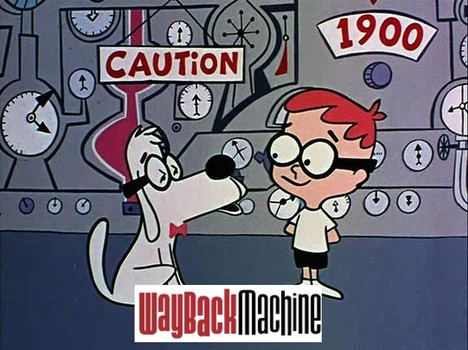
The original Way Back Machine

That’s where Historical Fiction comes in. What is it, though? Is a novel set in 1970 or 1980 a historical novel (yes), is a time travel yarn that goes back to the Civil War a historical novel (no)?

Just how far back do you need to go to make it historical? I could be wrong, but I’d say there is a technological answer and a cultural answer, and finally a unifying answer.

Technology – We go in major shifts of technology. I’d argue that a book set in the near past but after the Internet and cell phones isn’t a historical novel, but one that is before is such a story.

Cultural – Boy howdy, does our culture shift. We’re in the midst of a major shift right now. Such recent shifts include the 1960s and the 1920s before that.

Unifying – An Historical Novel is one that makes the time setting a character. They can be centered on personal events, like in Debi Gray Walter’s Through the Eyes of Grace, that follows her grandmother’s story and the cultural mores she had to navigate. Gone with the Wind is a novel centered on a world event, the Civil War. Technology was different, culture was different, all had to be developed in the story.

Historical Fiction is written for a variety of audiences. Debi’s book is for adults; Bonnie Manning Anderson’s book, Always Look for the Magic, appeals to a wide audience, yet is written so middle-grade kids can enjoy it.

Style of writing can also vary. Some authors perfectly capture the era’s style and language; others go for verisimilitude (an example would be Frost, a Ron Howard movie set in the 1970s. He first intended to capture exactly the ‘70s, but it quickly became apparent that the audience would be laughing at the styles and colors; he pulled it way back to merely suggest the ‘70s style).

The key to writing historical fiction is research, research, research. Find more information than you’ll need and use it strategically. For example, cows and goats have been giving humans something to drink for thousands of years, but we’ve had refrigeration for just over 100 years. That means people have been drinking warm milk for more than 95% of its existence (people were always sleepy back then). Does the fact belong in a novel? Maybe, but “commenting” on the time often betrays the storyline. “Unbelievably, Luc drank the warm milk without batting an eye.”  To Luc, that wouldn’t be strange. Yet I do have a memory of a farm and milk straight from the cow that steamed in the morning chill. Such an observation could work without pulling the reader from the time period.

Do work the year in if no world events make it clear. I read a novel recently that I thought was set in the 1920s until the last chapter when the main character used a cellphone to call the police. Whaaa?!  I was NOT happy.

Do you write historical fiction? Do you read it? What do you like about it? Let me know in the comments below.


What’s in a Name? EVERYTHING!

Name recognition is a big deal. It’s a cornerstone of your platform. You have to get it See the source imageright.

Way back in my freelancing days, I had a decent platform. Enter my name in a Google search and there I was on the first page. Not the top, but somewhere in the middle, behind the Real Estate guy and Genetics CEO, but ahead of the musician. I turned down more business than I accepted.

Then Parks and Recreation came out, and suddenly “Rob Swanson” Google-corrected to “Ron Swanson.” Business dried up, I got another job and… but that’s another crazy story, and this one is about names.

“Robert” and it’s derivatives, “Rob” which means to steal, and “Bob” which means to float… badly… is one of the most popular names in America. “Swanson” to my surprise, is also way up there, and a common name can be death on Amazon for a writer. I could use my old stage name, but armed with that, some things may turn up on Google search better left hidden.

That’s why I use my full formal name for my books: Robert Alexander Swanson, a mouthful, but nonetheless almost unique. That was my only real option if I wanted personal credit for my books and screenplays. Married women have an alternative. Can you guess what it is from the choice of a couple of my authors?

Bonnie Manning Anderson

Debi Gray Walter

It isn’t my intent to publish only people with common names, but Rob, Debi, Bonnie, Steve, Cindy…. them’s the breaks.

Bonnie and Debi used their maiden names, yet there are other options for us plain Janes and Johns. Look to literature:

S.E. Hinton– Initials used to obscure the fact that the Outsiders writer was a woman. Far too cagey for male publishers to figure out.

Robert B. Parker – Author of the Spenser series. I thought about going with my middle initial, but I like my name block with all three names of various lengths being the same width.

Thorson D. – I’ll be honest and admit I’m not sure if he used his last name initial or got his first initial out of order. He wrote short stories back when the world was black and white.

Bill Quiverlance – A pen name I used in my ego-driven college days. Bill = William, Quiver = Shake, and Lance = Spear, for the sharp-witted, William Shakespeare (I said it was ego-driven).

Aron Osborne – Okay, this is Aron’s real name, but because his parents can’t spell, he’s got a unique name with a missing “n” and an extra “e.” Check out his book, So Many Mountains, Which Ones to Climb. You, on the other hand, can purposely misspell your name. I could be Ron Swanson with an instant platform… but, naw.

Is this a problem you have? Or are you one with a name so unique no one can spell it (Aloysius – how you get Al You Wish Us out of that, I don’t know)? How will you/have you handle(d) it?

www.prevailpress.com


Change Your Stripes – Part 2

Do you write non-fiction books? Heck, do you write non-fiction BLOGS? Then you should write a novel.

What better way to demonstrate how your non-fiction topic works in someone’s life than, you know, actually demonstrating it someone’s life?

elephant
This might take changing your stripes too far.

Depending on your topic, a common approach is to afflict your main character with the problem your topic corrects. Establish a mentor figure who coaches your main character in your topics step-by-step solutions to reveal how well your solution works.

Two such didactic (teaching) novels spring to mind. Eliyahu Goldratt’s The Goal, and my own novel Do Angels Still Fall?

In The Goal, the main character runs a failing manufacturing company. At home, he is also having problems with his marriage. An old college professor runs into the main character and ends up drive-by mentoring him in process improvement. The mentor isn’t always around, the hero has to fumble through his own discoveries and even begins to apply them also to his marriage. Who knew the Theory of Constraints could be so interesting?

In my novel, a Guardian Angel is given charge of a rambunctious young boy who is allowed to see and interact with his angel. This is new to the angel, as well, who makes a rash promise, prompting him to wonder if angels still fall. In his interactions with the boy, the angel corrects his misunderstanding of God, who is not the angry deity we too often believe he is. As a Sunday School teacher and father of three, I wrote this to introduce people to the God I know and love.

Another writer is writing a time travel novel so his main character can apply principles he learned late in life to his younger self.

There is no set formula, just write a compelling story that teaches (subtly or not) your principles. Readers who love your non-fiction books will not only buy this for themselves, they’ll buy it as a gift for those they love.

Go ahead, get started! And keep checking back here for writing hints.

www.prevailpress.com

Change Your Stripes – Part 1

I’m a novelist; cut me and I bleed story. Maybe you’re like me and would rather make stuff up than document real life. If so, bless you! Now let me tell you why you should write a non-fiction book anyway.

If you have friends outside your writing tribe, you’ll discover that only about a third are readers of any kind. Of those, only about half read books, and of those two-thirds, they only read non-fiction. Your results may vary, but not by much. Non-fiction dominates the lists.zebra

Ipso Facto, you should write a non-fiction book to increase your audience. And increase your possibility of speaking engagements, if that’s your thing, which it should be to grow your platform.

If your first thought was “blegh!” I was right there with you. I’d ghostwritten a dozen non-fiction books for others, but writing my own? YES! In fact, my non-fiction books will be hitting the digital shelves in a couple months.

There are a few things a novelist should be aware of when considering a non-fiction book:

  • This isn’t a permanent switch, you can be one-and-done… unless you love it and want to keep doing it, then go for it.
  • There is no template for non-fiction books. Who Moved My Cheese is much different than How to Swim with Sharks without Being Eaten Alive, which is different than Moneyball. You, with your boundless creativity, can create your own kind of non-fiction book!
  • It CAN be fun!

Did you know you can become an expert in a field by just reading three books about it? Not sure I believe it, but that still isn’t the approach I took. I am widely read in faith, science, technology, and weird stuff, and by being deeply conversant in many subjects that few people care about, I (and you with your passions) can find an aspect that no one has considered before that people do care about.

You don’t have to be a Ph.D. in a topic, but I do recommend being passionate about your topics and having a demonstrable deep understanding.

How can you bring together two or three of your deepest passions and come up with something amazing? For me, I have a constant soup of topics simmering in my brain. I might be developing non-mathematical models of the universe while also thinking about the miraculous thing that is… water (three states? There is more than a dozen when you add pressure and more unique properties than any other substance or fluid).

My soon-to-be-released book, Creativity Wears Boots, came about by my interest in brain science and art. In pondering them, I discovered something no one has ever thought of before (strong claim; read the book to see if I’m telling the truth).

Debi and Tom Walter wrote Cherishing Us! Their book culls romance tips from their marriage blog. Debi is also the author of Through the Eyes of Grace, her first (but not last) novel.

What are your favorite topics? What do you love to read about? What is your specific take on them? How can you mix and match them? You’ve got a non-fiction book in you, I know it!

Tomorrow, I’ll tell non-fiction writers why they should right a novel. See you then!

www.prevailpress.com

Psychic English Space Sharks of Abiding Faith

Before I am a writer, I am a reader. I don’t get to do it enough these days, but I can safely Image result for sharks in spacesay I’ve read more than 40,000 books (220,000 books if you count comic books). I can single out six authors who have shaped my writing and given me hours of enjoyment.

Peter Benchley

Jaws was fun, White Shark was the scariest book I ever read, and Q Clearance was one of the funniest books I’ve ever read; it helps to have a literary bent for that one, though. Benchley can build suspense like nobody’s business. I’ve found every one of his books gripping.

Steven King

I skipped my first day of college to finish reading Salem’s Lot. King has some real clunkers, but most of his voluminous books are easy, fun reads. He doesn’t write horror, he writes Average-Guy in Extraordinary Circumstance stories. And The Stand is a Christian novel whether he thinks so or not.

Robert B. Parker

The Spenser, Jesse Stone, and Sonny Randall series are terse, solid writing. He doesn’t over-share or get bogged down. Now that he’s dead, his series are still coming out (yay! Not all are great, but they try). We see just the steps it takes to solve things, hopping from A to B to C all the way to Z with no skipping or jumping. They aren’t overly emotional stories, but compelling nonetheless.

Dick Francis

A former Queen’s Jockey turned novelist, Dick Francis is the Fred Astaire of writing. His books are effortless, graceful, and impossible to copy. Though dead, he’s still writing (or his son is). Francis books are curl-up-in-front-of-the-fire stories.

Frank Herbert

Nobody word-builds like Herbert. Dune was so convincing you’d think it was out there somewhere. He gave us a rich folklore, unique space navigation, and intra-world infrastructure. Then in Dreamcatcher he gave us depth into an individual’s spiritual beliefs. That’s range, folks!

C.S. Lewis

Most people go to the Narnia books, but for me, his Space trilogy and non-fiction books were the crème-de la-crème. His relentless logic about faith, his understanding, and acceptance of the mysteries beyond us, made me comfortable with my faith.

Clearly, one can see my spiritual path from the authors I relish, some of whom are atheists, others deep-faith Christians and everything in between, all of it great writing.

I could easily list off a spiel of influential books, but I honestly don’t remember the author names. Why? Because they didn’t write many books. This list of authors was prolific, and it speaks to the need of a body of work (or hit movie based on a book) to be successful and gain a following.

So get cracking!