All posts by swanstuff

Writer, small business wannabe, pundit, philosopher, often hopelessly confused, and blessed by a gracious God beyond all imagining (the views expressed by this blogger do not necessarily reflect the Supreme Being, but this blogger hopes he doesn't embarrass the Big Guy too much).

Valentine’s Day is Hard

They say Valentine’s Day can be painful for single people. Let me tell you something from 29 years of marriage… It can be difficult for married people as well.

Don’t get me wrong, I love my wife, more today than yesterday and that’s been true every day since we met. Today is deeper and wider than it is fiery and cha-cha.

We’re both romantically impaired. There I said it. To us a lighted candle means it’s too dark to read. Fortunately, we have electric lights and a book that serves as a great inspiration. That book is…. drum-roll, please…

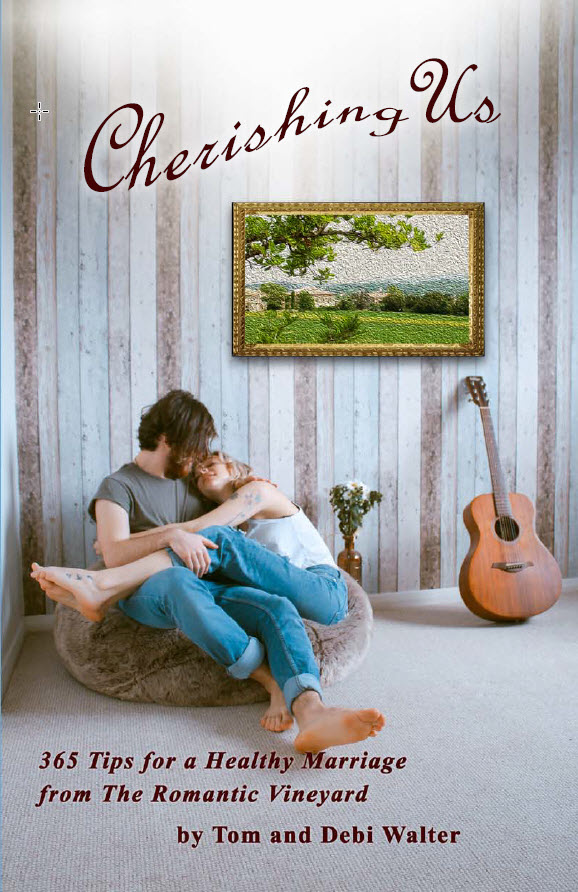
Cherishing Us! by Tom and Debi Walter, the people who put the romance in romantic.

See the book, buy the book

Young love, old love, any love…

This book is full of challenges… I mean “tips”… one for each day, that ignite your days AND nights…

Another book that helps is 7 Essentials to Grow Your Marriage by Steve and Cindy Wright. They lay down the fundamentals of relationship from a he-said/she-said perspective. Getting the masculine AND feminine side of each essential provides a balance other marriage books lack.

See the book, buy the book.

It can fix what ails ya.

There’s still time to buy them for Valentine’s Day. Guys, I assure you, your wife LOVES it when you invest in your marriage!

PodCast

Because a few friends are doing them, I’m now listening to some podcasts on Podbean and Stitcher. I haven’t taken the plunge yet to do any of my own but that might change in a few months when my wife and I become empty-nesters. Why?

Well, you see, my office is in my garage, and while I love it, you have to take a perilous journey through the wreck of my garage to get to my little slice of paradise. Once the last kid moves out, I’ll be moving my office into one of the bedrooms where I can comfortably invite people in for group recording.

See the source image
Snowball fight! (My Blue is black. Supposed to be Chrome, but they work the same. No judging on color here!)

So why is this on a writing blog? Because writing touches everything. I told a class of teenagers that if you can write well, you’ll always have a job. It was challenged by a kid who planned to be a millionaire curating his YouTube channel (he probably is, too). So, naturally, I had to defend my assertion.

Writing teaches you everything has (or should have):

  • Structure
  • A beginning, middle, and end
  • Clarity of thought
  • Clarity of speech
  • A point of some kind
  • An “argument” or thesis to be proved.

Blog posts, podcasts, YouTube videos should all have these. Random, gargled ‘casts and videos are quick to fail.

To take it further; every business requires writing and a lot of it, from marketing and franchise documentation, to technical writing and instructional content. The skilled writer can enter a job almost anywhere and end up in a writing role as they stand out from their barely literate coworkers.

On a different point, blogs and podcasts help you build a platform, so a word about them.

  • Have a unifying theme
    • I maintain a blog that is a drain catcher – it’s about whatever grabs me, but while that blog has some followers, this blog, about writing, publishing, and creativity, gets more hits. We, as audiences, have our hot themes and will follow a humor blog, or a movie blog, or a spirit-filled podcast, but you have to be firmly established to get away with random stuff.
    • Make the unifying theme something you’re excited about, not about trends (unless you love trendy stuff)
    • It starts slow. Winners are those who keep at it. All it takes is an influencer finding it to make your blog or podcast explode (quick story, a lady I’m acquainted with posted some high-end diaper covers on Etsy. A Kardashian liked it and her popularity soared. It could happen to you).
    • Inform people about your blog/pod through social media. An audience will accrete.
    • Use tags.
    • Distill the point of your content to a single sentence “All about writing” “Movie industry history” “Ghosts, Vampires, and other things that don’t exist.”
  • Don’t go it alone.
    • The best podcasts have two or more hosts. It evokes interplay, tension, conflict, banter, humor…
    • Get creative. I listen to The Industry, a ‘cast on the movie business, and Dan goes it alone… sort of. He’s the only host, but he includes interviews he’s either prerecorded or got permission to use.
  • Be contentious.
    • Conflict makes things interesting. You can do so by having a co-host who doesn’t agree with you completely, or by giving a fresh viewpoint, or introducing a little known fact or historical event.
  • Edit!
    • Unless you’re Robin Williams, spontaneous, unfiltered, stream-of-thought stuff doesn’t work. Aron Osborne is the only speaker I know who doesn’t ever “um” “uh” or mangle a word.
    • Clean up your audio by reducing room noise, removing ticks and breathes, maybe equalizing and adding a touch of reverb for warmth.
    • Audacity is free and is easy to use. A Snowball Blue is a USB microphone that works really well.
  • Have fun!
    • As is true with most things, if it isn’t fun, it isn’t worth doing.
    • Don’t stress about being perfect.
    • Learn as you go. It’s actually fun to listen to a podcaster get better and better.
    • But still monetize it!

A parting thought: I can’t think of a better personal title than Writer, however, begin there and recognize that you are also a Content Creator. Work the mediums into your schedule and you’ll accomplish more than you think. (Another quick story; I know a guy who’s a guru in one field, is now making videos, has written a book, and also does podcasts. I don’t know where he finds the time, but he’s clicking on all cylinders and is an amazing example of dedication. Darin Slack, you inspire me!).

Good vs. Successful

The terms we define ourselves with matter, but they are slippery. One could argue that in the past a GOOD writer was a SUCCESSFUL writer. Not true today, and maybe never was.

See the source image
You define your success… don’t go easy on yourself!

Today, a successful writer has one of two meanings:

  1. Is paid well for writing.
  2. Has accomplished a goal, completing a story well.

A good writer also has two meanings.

  1. Skilled in all aspects of writing.
  2. A decent human being who also happens to be a writer.

We all strive for the first definitions (well, not all; there are some strange people who write fan-fiction, which they cannot be paid for… I cannot fathom them), but we might settle for the second definitions.

It used to be that successful writers were well paid and skilled in writing… maybe. They might be good plotters and could get the words on the page, allowing a skilled editor to do the final draft. Others are pretty darn good but still need an editor (that’s most of us).

Today, successful and skilled can be two very different camps. I’m reminded of the uber-prolific writer I mentioned before on this blog, who wrote three new novels each MONTH, has published hundreds and is well-paid, but her books are terrible. Two of the biggest books last decade were Twilight and 50 Shades of Grey, neither of which are in any way or definition “good.”

I’ve met many great writers and all but a couple were wonderful people (they were under stress and still kind; they might be monsters elsewhere but I doubt it).

I would set my goals on the second definitions and my aspirations on the first definitions.

Today, successful writers are actually successful marketers. They sell, sell, sell.

Strive to be successful and good. Really strive to be successful and great.

But let me tell you a secret. If you’re a good writer without a ton of sales, you are still changing lives… just not as many of them.

A good book is an oasis. It pulls you away from the seas of life and lets you camp in awe and wonder. A good book calms you down as well as amping you up. It delights you and maybe scares you, and in the play of emotions epiphany trembles waiting to be discovered.

If you tell a story and tell it well, you’re successful. The uber-prolific writer will point out that many good books will build a faster audience of size but let me recommend that 3 books a month is too many. One book a month is too many. One a year is great, two is phenomenal.

My blogger authors will remind you that a good, focused blog can also build an audience for your books. Let me point out that marketing is required, but if you have many books, the reader that loves one book will buy the others, too.

So keep cracking the double-tailed whip of GOOD and PLENTY (not the candy).

Dear Writer, do you know how important you are?

If you author a humor blog, you may think you “just make people laugh,” or if you write novels, you may think you just provide “an escape,” and non-fiction writers may think they just inform, and all other writers may think a “just” is the sum of their writing. It isn’t so.

Every time a reader reads, she is exercising her imagination. In Chapter 6 of my book Creativity Wears Boots, I discuss what imagination is and its role in life. To summarize, Imagination is the ability to visualize what isn’t there. This is a vital skill, and like anything, it requires regular exercise to get stronger.

Helping the planet dream…

Imagination is necessary to ideation, product design, teachers, parents, entrepreneurs, construction workers, marketers, financial planners, assemblers, sales, and really almost every role on the planet. And those few that don’t require imagination will be improved by it.

As a writer, you demand people visualize your content. They’ll base that visualization on their own experience, and it won’t be much like yours, but unlike most other art forms, your canvas IS imagination.

Have you ever noticed how “inspire” and “imagine” are very similar? Inspiration is the dawning of something new in the mind. Anything can kick it off, and most of the time, it is a wellspring of imagination, that thing you strengthen.

You make people stronger every time they read your work.

You make the planet better every time someone reads your work.

You are not “just” anything; you are a vital cog in the machinery of society, culture, business, and family.

Can you feel how awesome you are and the gift you’ve been given?

Creating Audio Books

Audio books are still a bit of a novelty, but the people who buy them tend to be fanatic about it. It’s a growing market, though. I’ve intended to record my novels as audio books but never got around to it. Since my non-fiction book has been published, though, I’ve gotten more than a dozen requests for an audio version.

See the source image
Waveforms are pleasing to the eye… and hopefully ear.

Who am I to say no to money?

Some caveats:

  • I’m too cheap to hire someone to do it (it can get expensive, either up front or as 50% of royalties).
  • I don’t really need to. I’ve got a decent voice and an audio set-up, plus a lot of experience in voice-over recording for short instructional videos.
  • It’s time consuming, especially for me since my voice is only good for this type of work in the morning (I get horse mid-afternoon; not so much that its bad for talking, just for recording).

I’m going to share with you my set-up, my experience, and my discoveries.

Set-Up

The old USB condenser microphone I had used to be good but got steadily worse. Sound damping tiles and backdrops didn’t do anything about the echo, so I bit the bullet and bought a Blu Snowball. When I took down the old microphone, it was sticky, so I assume some melting was going on. With the Snowball, no sound tiles, no backdrops, and the slight echo drops out with a simple noise-reduction pass.

The Snowball hangs from a suspended arm, no shock cradle (none needed). The Snowball has a USB plug and two settings: single-user and multiple-user. The Snowball Ice is cheaper and only has the single user option, which is enough for a narrator. I got the Snowball because I got a better deal than the Ice (I ordered the chrome finish but got the black finish. No biggie, no complaint), and I may do some multi-voice recordings eventually.

It’s plugged into a desktop computer with a USB connection. I can’t speak to laptops, which I’ve had poor results with in the past.

I have Adobe Audition but use Audacity as the recording software because it’s a) free and b) very easy to use.

Rather than read from a screen or e-reader, I read the hardcopy book. That means I have to cut out page turn noise, but that’s easy.

Recording a single chapter at a time, I then run noise reduction and edit the mis-reads, breaths, and page turns.

Note: An audio book is submitted in multiple files, front matter and individual chapter files separately. I nonetheless record in one big master file (and click Save a lot!).  The reason is because beyond sound reduction, I’m going to process for equalization, a hint of reverb, and normalization for all files at once. If I do so individually, it will probably be fine, but why risk it?  By keeping each on it’s one timeline, when rendering it, Audacity has a setting to render as individual files.

My Experience

It’s fun a chapter at a time. I make a number of mistakes, but I know if I’m talking too fast or slow and can do a retake easily.

You’ll never be more aware of your spit than when recording long passages. Not a problem in my shorter work, but man, managing swallows and swishing is annoying.

It’s not difficult. Just imagine reading it to a loved one (not a child IF you naturally talk down to a kid). Editing is easy, and since I edit a chapter right after recording it, I remember where the problems are.

Oddly, the hardest part is remembering to leave several seconds of silence before and after the beginning and end of the chapter.

Though recording in stereo, I have to output in mono. Just something to keep in mind.

Discoveries

  • From now on, I’m going to record the audio before publishing the print version. Sentence that are difficult to say out load can be fixed, and typos found.
  • Your audio has to perfectly match the print version to take advantage of Whispersync (this Amazon Kindle feature was very helpful to my dyslexic daughter who could listen and read at the same time to help improve reading). That makes things like footnotes difficult (you read them as endnotes instead), and visual elements such as designs, graphs, and charts are a pain.
  • The Snowball is so good that even though I stopped and waited when jets flew over the house, I found while editing that the Snowball didn’t pick up any jet noise. It only grabs what’s right in front of it.
  • I’ve gained a new understanding of learning styles. I am as non-audio as you can get. Give me visual/read/hands-on and I’m good. Tell me what to do and I’m lost. I have to keep fighting the idea that so much is being missed through audio that the printed word carries; audio learners WILL love it. Trust in that.
  • I will do my first novel as an audio book, but probably not my second novel (it’s very long).

As a writer, what do you think of audio books?

As a reader/listener, what do you think of audio books?