All posts by swanstuff

Writer, small business wannabe, pundit, philosopher, often hopelessly confused, and blessed by a gracious God beyond all imagining (the views expressed by this blogger do not necessarily reflect the Supreme Being, but this blogger hopes he doesn't embarrass the Big Guy too much).

Titles Aren’t Just for Royalty

First impressions for books are the title and book cover. We’ll discuss covers in a future post and tackle titling here.

See the source image
Make it catchy!

When I was 11, I was casting around for something to read. I felt like something watery, and my parents kept a well-stocked library. It was either Robinson Crusoe (again), Kon-Tiki or Jaws.

Guess which I picked?

Great White, here I come!  But why?

My parents kept their books on shelves, like anyone else. All I saw were the spines and Jaws grabbed me. The title raised a question in my mind. Kon-Tiki did as well, but the word “jaws” was both common, crunchy (it feels good to say), and bizarre. I got to Kon-Tiki eventually, but not until Captain Brody killed himself a shark.

Ideally, you want your title to drop hooks in the reader’s mind that echoes for a while. Single-word titles are strong, especially if it’s powerfully linked to your story. Pilot Fish wouldn’t have been quite so catchy for Benchley’s book, but it might serve for a children’s book.

At the same time, many words can work too, if they stand as a strong brand for the book. How to Swim with Sharks without Being Eaten Alive! was originally titled Better Management or something forgettable like that. I think “Alive” could have been dropped because it seems to add one too many beats, but this book flew off the shelves and still does. The title sizzles.

What works? Who knows, really, but some good ideas are:

  • One-word, crunchy titles. Jaws, Bold,
  • A few words that relate uniquely to your story. The Trouble with Bees, or The Unbearable Lightness of Being.
  • Names of People or Places – Peyton Place, Ben-Hur, Jurassic Park
  • Metaphors – These can be silly, like How to Swim… or more serious; So Many Mountains; Which Ones to Climb? Or more ethereal Gone with the Wind.
  • Questions that resonate – Do Angels Still Fall? If it’s a question that resonates, that makes a reader say, “Yeah, what about that?” then you’ve succeeded.
  • Stuffy titles – The Curious Case of Benjamin Button or The Mixed-Up Files of Mrs. Basil E. Frankweiler, or The Battle of Carbon Falls Creek Wherein Aliens Invade. They have a sense of whimsy about them.

Titles that don’t work (or just might anyway)

  • Unpronounceable words or names. Mahfwpufl, or Myxyzptlc
  • Titles with no link at all to the story.
  • Boring titles.

The goal is for it to be memorable, clever, funny/whimsical or serious (it should match the tone of the book), thought-provoking, and sticky.

If you have a series of books with a strong series name: The Dead of Night, then your title should be one or two words, Dragonfly or Leatherwings.

What about chapter titles? For most mainstream fiction, just numbers will do, but for non-fiction books or younger audiences, naming your chapters is a good idea. They should be predictive for non-fiction, and predictive and clever for other books.

Go to Amazon and look through the books. How many titles actually strike you? The title mixed with cover can be compelling but what about the title by itself?

Titling is an art you should master!

Bloggers in Print

If you’re a blogger, you’re a writer (I can’t attest to the skill, mind you). Just by blogging, you’re creating a volume of content. Have you ever thought about compiling them into a book to reach a different audience?

See the source image
22!

I maintain several blogs.

  • Swanstuff – This is the lint trap of my mind. The topics are all over the place. I’d be hard-pressed to unify them into a coherent book. I began that blog to maintain my sanity. The only time I kept a journal, I was embarrassed to read it. Blogging fulfills my need for people to read what I write, even if it’s just a few readers. This is the first time I’ve publicized it, though. Not every post reflects what I believe now. Be warned.
  • Writes with Swans – Similar to the concept of Dances with Wolves, I write with my namesake. This was writing advise, articles, thoughts, and whatever struck me about the writing process. That blog has yielded to…
  • This blog – Why double the effort? My views on writing and publishing are recorded here.
  • Book blogs – I wanted a way to communicate with the kids who read my books. So far, none have visited. Not even worth the link but you can have it anyway.

I know several humor bloggers, Bonnie, Roxanne, and Doug to name three, the Walter’s marriage blog, a few artists and health nuts. Which blogs are suited to book compilations and what kind of blogs aren’t?

Are:

  • Humor blogs
  • Single topic blogs

Aren’t:

  • Poorly written blogs (hey, everyone can improve)
  • Smorgasbord blogs like my Swanstuff blog that covers any and all topics with no sort of common thread.

What do you do, just copy and paste all your blogs into a book? Not quite.

Thanks to Erma Bombeck and Dave Barry, humor bloggers have it easy, but in all cases, there are a few things to keep in mind:

  • A post does not necessarily equal a chapter. Group common thread posts together. Can they be turned into a longer, better chapter together? If not, is there a valuable order of posts? Chronological almost never works.
  • Not every blog post is a keeper. Everybody has an off day, so weed out yours or rework them to be better.
  • Consider voice. Ideally, your blog has a single voice across posts. Is it a good one? Might it be worth creating a new voice with some judicious rewrites?
  • Think about bridging your posts/chapters. This will probably require some new writing, perhaps a framing device.
  • Build – A good book has a beginning, middle, and end. Even though your book is likely episodic, you want to think about progressing the viewpoint to a natural conclusion. If you write a humor blog, read humor books and get a feel for them. Read books within your topic to see how they work. Your book doesn’t have to be the same but know what works in theirs, so it can work for you.
  • Length – You should be aiming for 150 – 200 pages, more if the topic demands it.
  • For topic blogs, perhaps you should use your content as a base and rewrite using your posts as a well from which to draw.

If you do maintain a quixotic blog like mine, look deeper. Are there groupings of individual topics? Many of my posts discuss politics, society, science, family, and weird stuff. With some work, I could combine similarly-themed posts in chapters.

What about your blog?

The Non-Fiction Dilemma

“My topic has been done to death!”

Well, most topics have been. Health, Wellness, Faith, all have been covered extensively. That doesn’t mean you’re in trouble.

See the source image
So get writing already!

Take Christianity, for example. Holy bananas, there are a lot of books out there. Volumes and libraries of nothing but books about Jesus. Fortunately, it’s a vast topic. Your non-fiction books don’t have to cover every aspect of a subject, you just have to tackle a corner of it.

Further, while Christology doesn’t change, interpretation does. Some of that interpretation is wrong, or heavy-handed, or off just a bit.

In Aron Osborne’s book, So Many Mountains; Which Ones to Climb?, Aron focus on the important stuff, and in doing so, gives a glorious picture of our loving God. If we tackle the important mountains, the rest falls into place.

My forthcoming book, Creativity Wears Boots, looks at an aspect of creativity and art that I haven’t seen written about anywhere before. What IS creativity? What IS art? What is its purpose and how do you develop it? Why is every human and artist whether they know it or not?

Plus, you have your unique take on the subject. It can be funny, anecdotal, technical, serious. If Bonnie Manning Anderson wrote a book on marriage, it would be hilarious and very different than Debi and Tom Walter’s book, Cherishing Us, a romantic look at marriage. Additionally, the Walter’s book is list-oriented, a romantic tip for each day of the year. I suspect Bonnie’s would be more essay-oriented. Yet another marriage book is by Steve and Cindy Wright, 7 Essentials to Grow Your Marriage, which is unique because Steve tackles each essential from the male perspective and Cindy from the female perspective (guys, when you read it, read both sides, it’s very eye-opening).

There’s also your audience to think about. You can direct your book to children, teens, young adults, adults, and us old folks.

Your topic may be old, but your take on it can be new a fresh. What you bring to your topic is YOU.

Lions and Tigers and Bears, Oh MY!

Let’s look at Fear Fiction. The reader loves it because it scares them or mystifies them.

The category is, again, subdivided into smaller, distinct categories.

Thrillers: Action-based stories with lots of adrenaline, these works focus more on immediate reaction, jump scares, surprise, and blind fear. It’s situational, fast moving, and pants-wetting prose. Movie examples include Alien, Godzilla, and King Kong.

See the source image
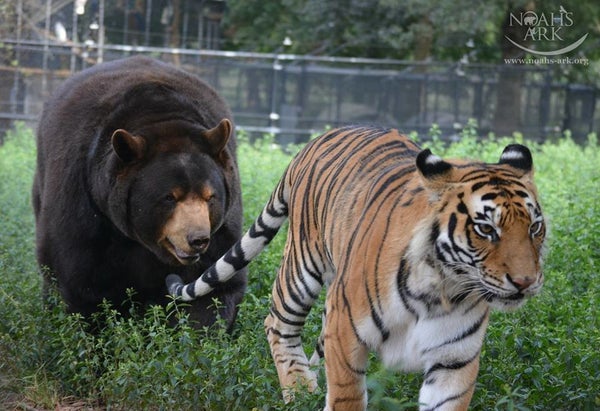
This bear looks like he’s about to enter a thriller!

Suspense: More atmospheric than thrillers, these stories focus on psychological fear. They’re slower and tension builds like a gathering storm. Thrillers contain suspense but it’s often more dread of short duration while suspense is long duration, with hills and valleys that continually build to a climax. The suspense characters are changed profoundly; thriller characters are rarely deeply changed. More movie examples include Signs and most of M. Night Shymalan’s movies. I’d also put a lot of Stephen King’s books here.

Horror: True horror goes where the other subcategories rarely go. These trade in the obscene, sometimes with a supernatural aspect, sometimes with a psychological basis, but always with an offensive underpinning. These stories show a distorted nature of people and settings. Supernatural monsters like vampires and werewolves are an affront to nature and, you know, they eat people. Night of the Living Dead and stuff like that.

Mystery – Really its own animal, mystery is often brought up with thrillers and suspense because they can belong to these subcategories. Here, though, the main character has a mystery to solve as a cop, PI, or amateur sleuth. Tension and suspense should be a part of it, and the hero should be threatened, yet fear doesn’t have to be a part of it. In suspense, the main character doesn’t choose to be involved, they’re typically trapped. In mystery, the main character chooses to solve the mystery.

Adventure – Like mystery, this is more fun action than outright fear. Light suspense, fights that are almost comic in the fact that punches that should kill don’t even leave a bruise. Indiana Jones, all superhero movies (although, the possibly released New Mutants intends to go the horror trope route. Disney hasn’t said if they’ll release it as shot).

It seems like each of these should have the indicator stickers that hot sauce has at Tijuana Flats. Thrillers, Suspense, and Horror get the frowny face; Mystery the straight line face, and Adventure the happy face.

What appeals to you about this category?

History is My-story

No one’s life is boring if they are continual learners. Life is a discovery. There’s gold in them thar personal histories!

Memoirs are not just for celebrities. While I admit it takes a gift to find the excitement in your personal history, some people have stories that just scream to be written down. But memoirs have a difficult structure to them. First, because there is no structure, and second because there is so much ground to be covered. How do you keep the story going from childhood to whatever you are now?

See the source image
No, no, no, I said write ABOUT yourself, not ON yourself!

When Michael J. Fox writes a memoir, it’s pretty easy. We know who celebrities are and expect them to reveal secrets of their past we want to know.

But if you aren’t a celebrity, we have to establish that all up front. Begin with the ending, and drive in your hook.

What’s your life like now? What heights or lows are you living now?

Are you a police officer or corrections officer? What kind of immediate interaction can you show me that sums you up now, which is in contrast to who you were then? Were you a cheerleader or drug addict? Did you have it all together, or falling apart, or did everyone think you had it together when you didn’t at all?

A memoir is usually written first-person, which allows your present self, the narrator, a degree of introspection. You can establish the now, pop back to the beginning, and either tell the story from there or jump around in your timeline. The only rule is tell a great story, and stick somewhat to the truth.

Just somewhat?  Yes. Strive for verisimilitude, an appearance of truth, but recognize the demands of story may require you to combine characters (so the reader doesn’t have too many people to keep track of), sharpen some experiences (that doesn’t mean lie, it just means shape it for story), leave out some experiences (not everything matters), and change settings and names (to protect the innocent and guilty alike, and prevent you from getting sued for libel).

Spend a lot of time in research, and by that, I mean researching yourself. Define:

  • In startling detail, exactly what your journey was. That’s the spine of your story. You should be able to sum it up with a sentence.
  • Write a list of events that mark the twists and turns of the journey. If it isn’t on that path, don’t include it.
  • Determine when and what the epiphanies were; the events that spurred you forward on your journey.
  • The points that held you back from your journey, the doubts, the pain, the fear.
  • What constitutes the climax of your journey, which brings you back to now.
  • How you will tie it up in a bow.

I recommend making a timeline, big, on a corkboard or wall. Once you have all that, begin writing.

That’s all there is to it. Well, more like a sliver of what there is, but this will get you started.